
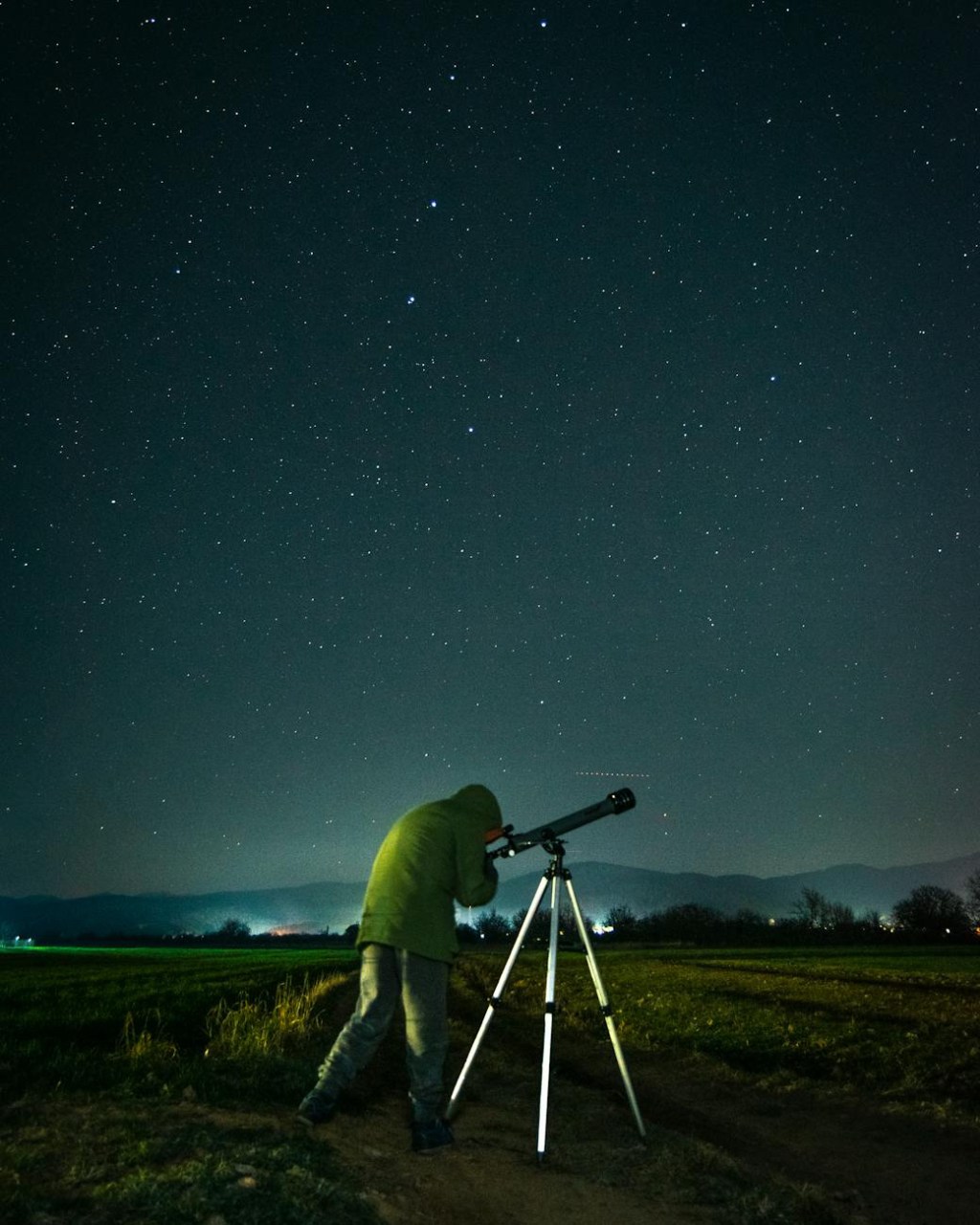
“I fear the day when the technology overlaps with our humanity. The world will only have a generation of idiots.”
~ Albert Einstein
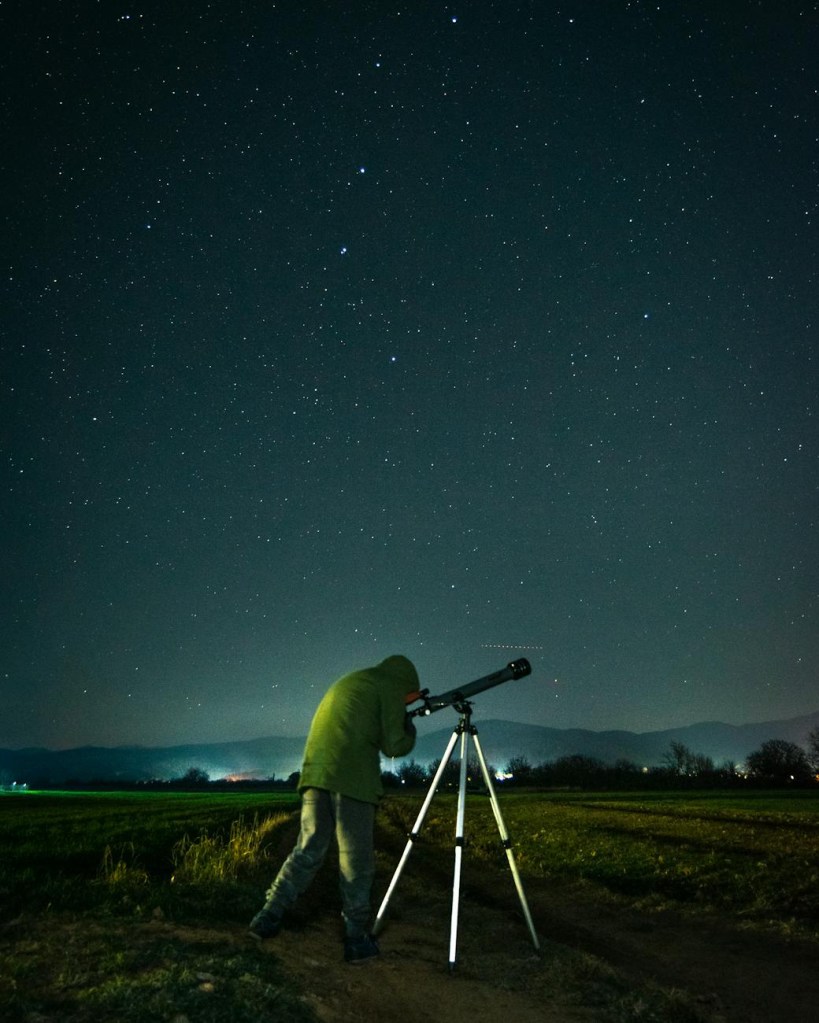
Before Galileo improved upon the invention of the telescope, in 1609, only 7 planets were included in the astrologer’s arsenal. The inner planets Mercury and Venus, combined with the Moon, plus Mars, Jupiter, and Saturn. These were and still are the planets seen with the naked eye. Today, it’s hard to find an astrologer who is married to their “eye piece,” meaning one who is obsessed with seeing the actual the planets in the sky.
The telescope’s invention revolutionized astronomy by providing detailed observations of celestial bodies, which helped separate astronomy from astrology as a distinct discipline. Astronomy became more empirical and focused on physical phenomena, while astrology remained rooted in metaphysical and spiritual interpretations. This shift also influenced philosophical and spiritual perspectives, emphasizing scientific inquiry over mystical traditions.
Galileo was the beneficiary of The Renaissance and The Enlightenment, which in some ways resurrected Ancient Greek curiosities and inquiry. In fact, we could travel back even to Hipparchus (c. 190-120 BCE) who first introduced a more empirical and mathematical approach to astronomy. The separation of astronomy from astrology, previously tied to metaphysical interpretations and speculative cosmologies, marked a decisive shift toward empirical inquiry. Something was gained in the way of objective knowledge and the eventual unfolding of the principles and properties of the physical universe, the domain of physics. But something was lost, an intimacy with the heavens, and our sense of connection to a Higher Purpose and our place in the cosmos. Perhaps the focus became less about the “why” of it all, and seeker instead became obsessed with answering the “what,” “how,” and “when.”
The advance of computerization can be seen as the penultimate “separator” in humanity’s relationship with the cosmos. Today, anyone with a computer or smartphone can generate astrological charts with little to no knowledge of the sky, let alone the experience of observing the actual movements of planets. The once intimate act of stargazing, which connected human beings to the vastness of the universe, has been replaced by algorithms and automated calculations. With artificial intelligence now producing astrological interpretations that are rote and mechanical, even our engagement with cosmic mysteries has become impersonal. This mirrors a broader cultural shift—the fading intimacy between people in an increasingly digital world. Just as we have lost direct connection with the heavens, we risk losing meaningful relationships with one another, as technology mediates and often replaces authentic human interaction.
Direct connection—whether with the stars or with other people—is essential for cultivating a sense of belonging and purpose. Observing the sky was once an act of wonder, reflection, and reverence, much like meaningful relationships are built on shared experiences, vulnerability, and presence. As technology advances, it threatens to leave behind not only our connection to the cosmos but also our ability to connect deeply with one another. The stars, once a source of inspiration and existential reflection, risk becoming mere data points in a digital framework—a reminder that progress without intimacy can lead to isolation. Perhaps what humanity needs most is not more knowledge or computational power but a return to direct connection—both with the heavens above and with each other.
HVA
💚🍀
 Hudson Valley Astrologer
Leave a comment